
Digital Derivatives – Crypto Market Correlated?

Digital Derivatives is a weekly newsletter bringing you the latest research, information and analytics from the cryptocurrency derivatives space brought to you by Delta Exchange. For last week's edition, click here.
Market Moves
- Bitcoin (BTC) - $7,309.84 (+0.21%)
- Ethereum (ETH) - $172.18 (+1.31%)
- Ripple (XRP) - $0.199 (+0.38%)
- Bitcoin Cash (BCH) - $265.07 (-3.23%)
- Litecoin (LTC) - $46.16 (+0.10%)
- EOS (EOS) - $2.74 (+0.38%)
Derivatives Insights Market Caution And Skepticism Continues Major markets climbed throughout the world over the course of the past week, with cryptocurrencies, gold, oil and traditional market indices making gains despite global socio-political uncertainty flourishing.
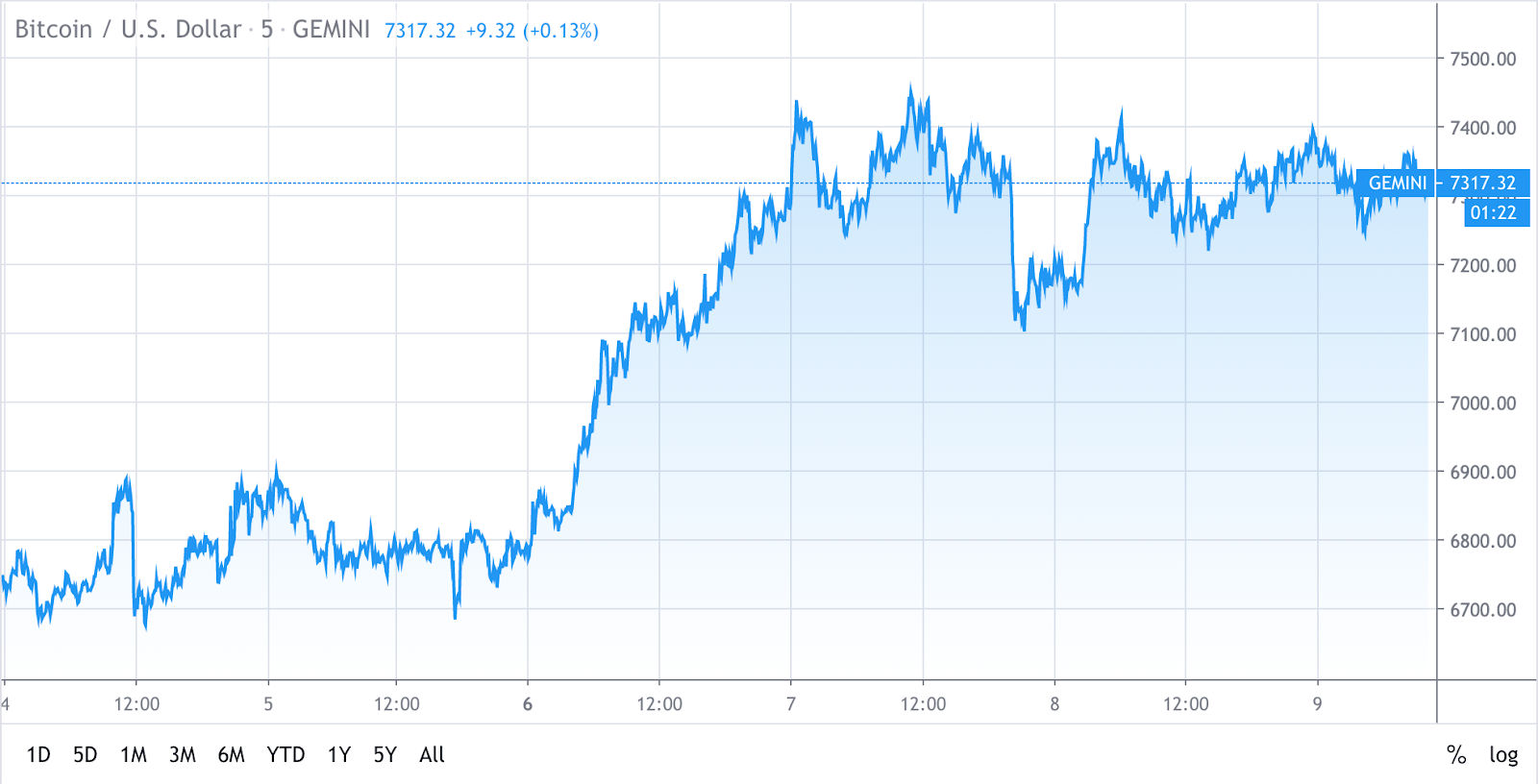
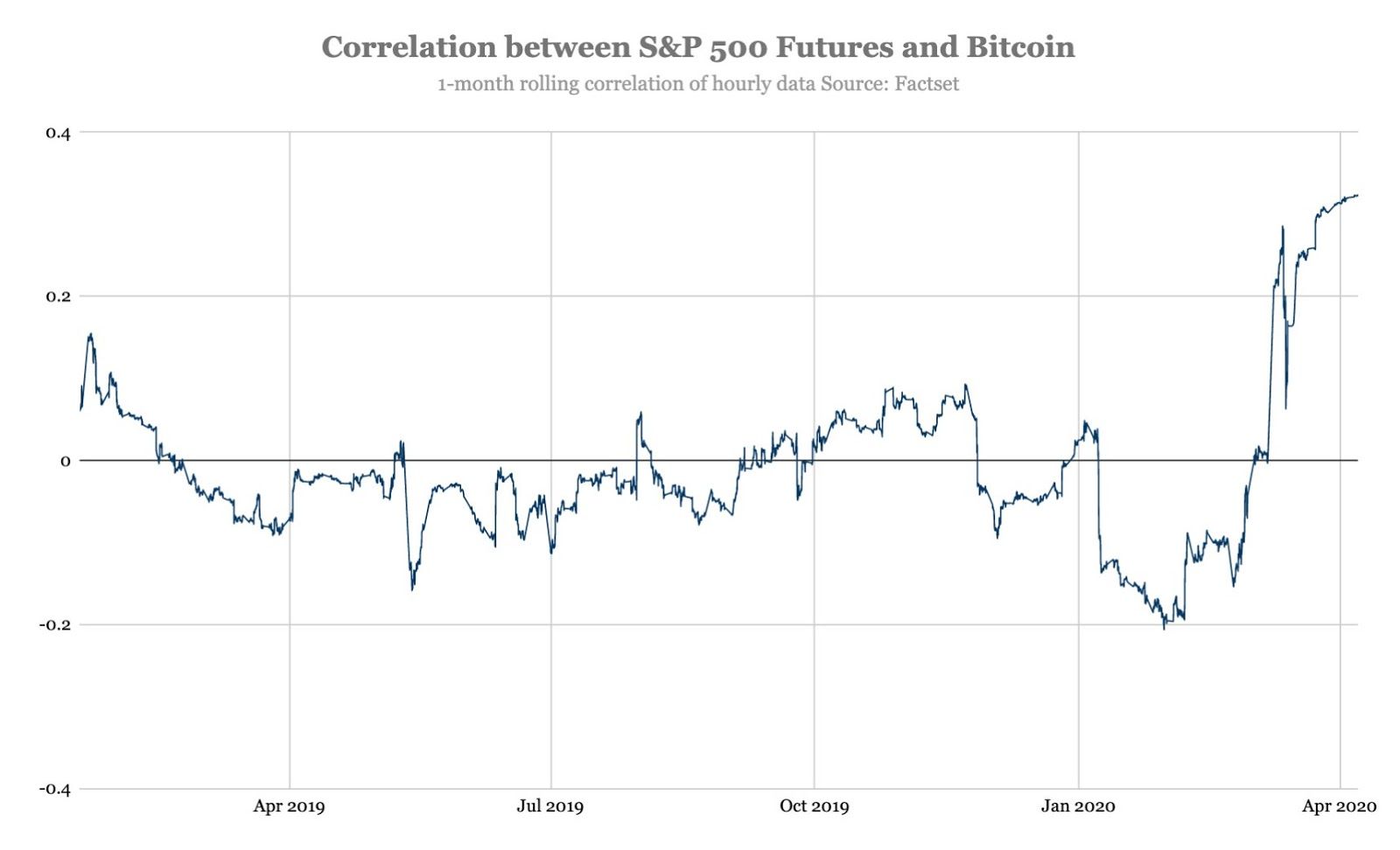
In the past week Bitcoin has seen a 15% rise in price, with Ethereum gaining +20%. In that same time span the S&P500 has gained 12%, Gold has gained 5% and oil has gained 24%. This is, of course, in the facing of growing economic turmoil, record global unemployment levels and a rise in global corporate bankruptcies. Over the previous 3 months the correlation between S&P500 and Bitcoin has been growing steadily, peaking in April. This is unlikely to continue, but the question remains as to which of the two will diverge and when.
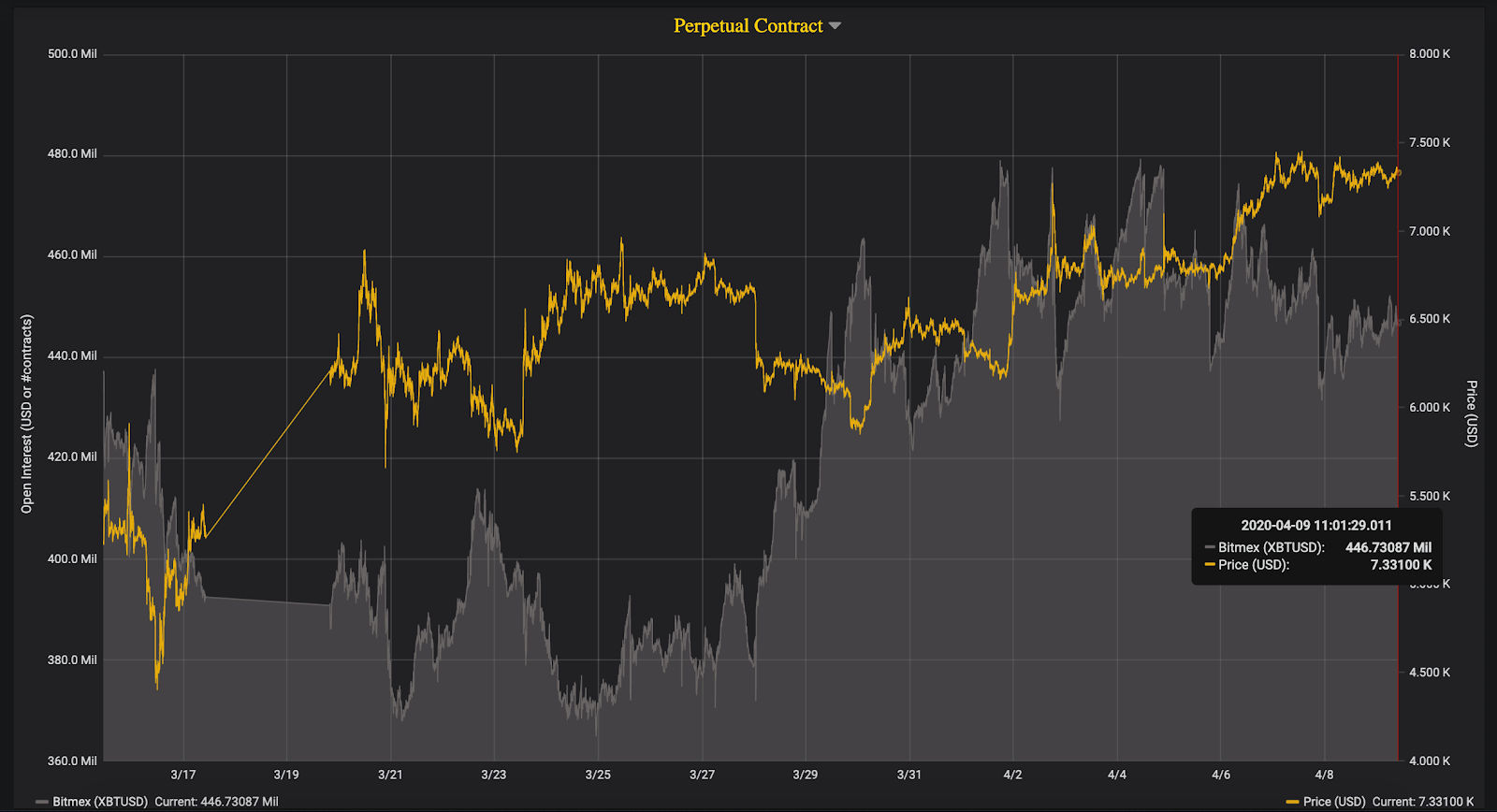
Open Interest Up 25% Last 2 Weeks Open Interest (OI) - a measure of the growth of interest and capital into a derivative market - has been trending upwards since the Black Thursday fall on March 12th.On the BTCUSD pair BitMex, Open Interest has increased from $370m on March 24th to $446m as of today - an increase of just over 20% in the span of two weeks. This has coincided with the price increase from $6.7k to $7.3k, a near 10% gain over two weeks.
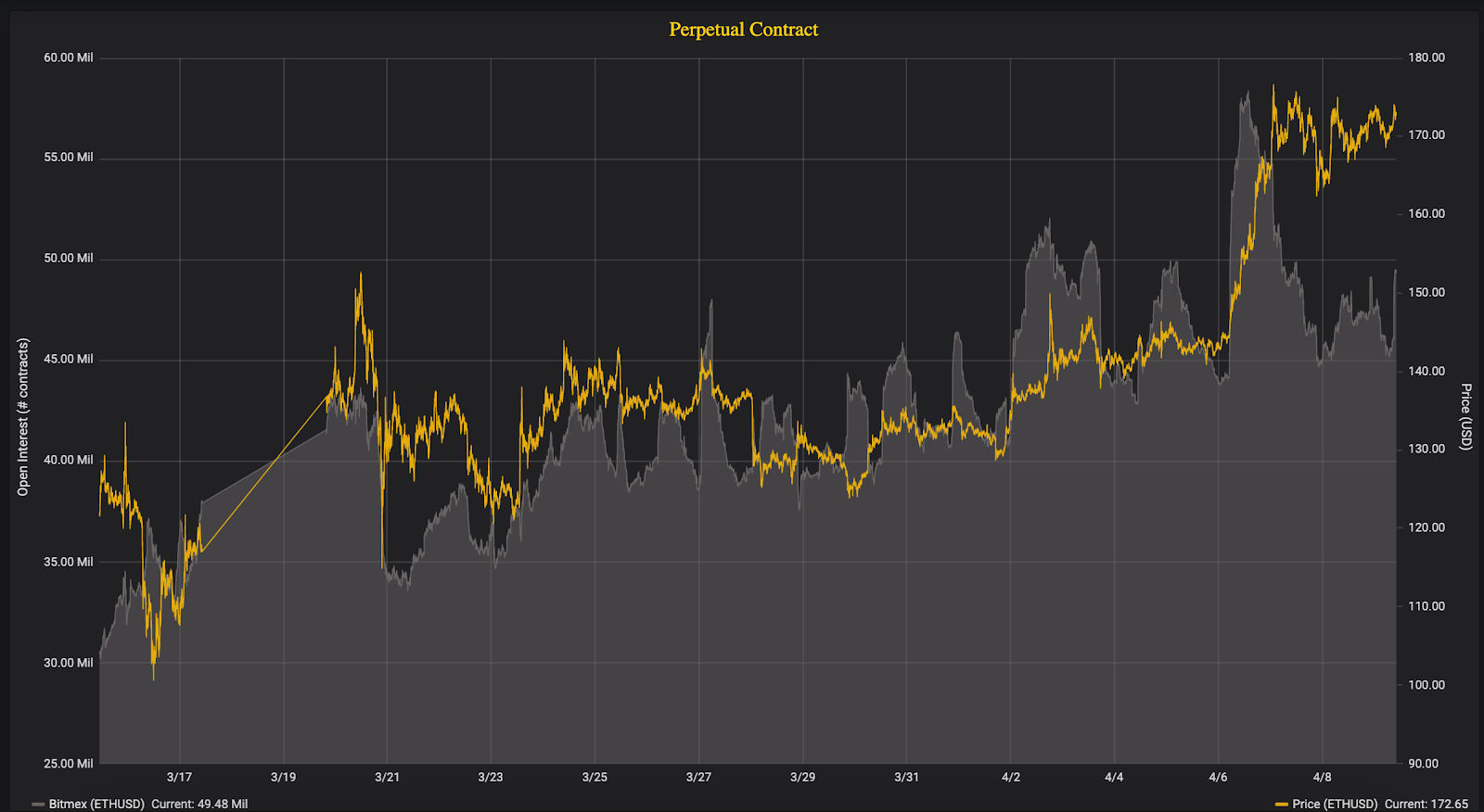
In the same time, Open Interest on the BitMex ETHUSD pair has risen from $34.7m to $49.4m, an increase of over 40%, as the price of Ethereum rallied from $130 to $170+.
Over the coming weeks we see both Open Interest and asset price drive higher as we approach the upcoming BTC halving. There is skepticism in the air, with both trading volumes and price bouncing around. Spot trading activity has been outgrowing derivative trading volumes in recent weeks, which could ease downward pressure on cryptocurrencies. Spot trading volumes are at their highest level since June 2019 with a significant uptick in new account openings to coincide with the COVID19 lockdown. This is unprecedented and not typically something witnessed following significant price crashes. Whilst Open Interest is climbing gradually, leveraged traders were hurt by the events surrounding March 12th and it is unlikely that market confidence will return to pre-crash levels anytime soon - despite upcoming halving. Bitcoin Cash “Halves” - Profitability Drops Bitcoin Cash (BCH) has successfully completed its halving event, effectively cutting its issuance rate in half and reducing its block miner rewards. The Bitcoin Cash halving took place at block height 630,000, midday UTC on Wednesday, reducing the mining reward by 50% to 6.25 BCH per block. In essence, this means a 50% reduction in BCH miner revenue, severely damaging miner profitability, with many BCH miners now generating negative daily profits with significant infrastructure costs. The data here suggests that many BCH miners, at the current hash rate and price levels, are struggling to generate profits and are in the position where they must either:
- Mine at unprofitable levels for the foreseeable future in anticipation of a price increase.
- Switch their setups towards mining a more profitable network (e.g. Bitcoin);
Since the halving, the hashrate of the BCH network has fallen by more than half. Put simply, the hash rate is a measure of the processing power of a specific network. A falling hash rate, as is currently the case with the BCH network, suggests a decrease in the processing power of the underlying network, resulting in an increased risk of attack.
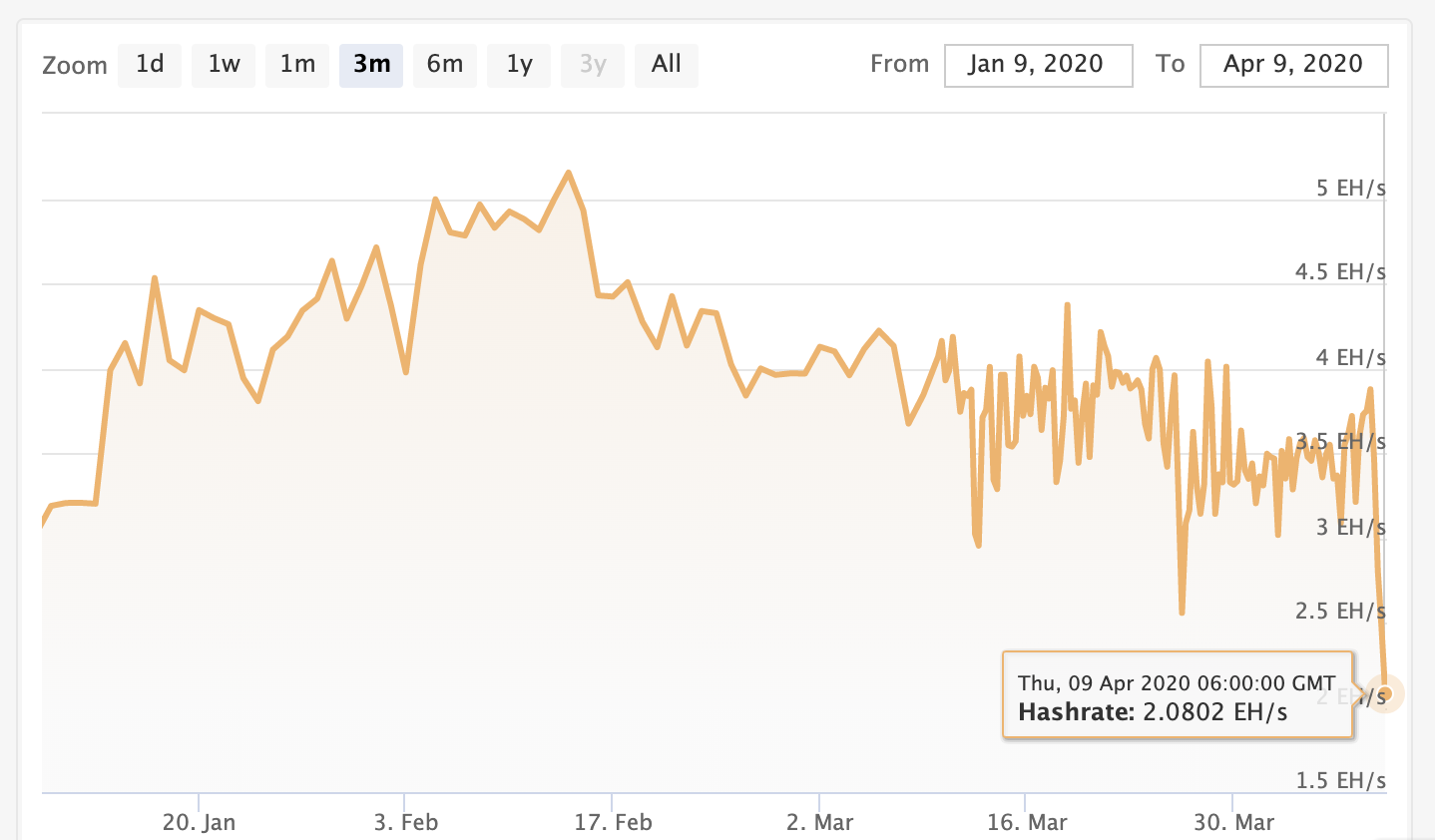
Despite already being on a downward trend since the middle of February, the hash rate of Bitcoin Cash has dropped by almost 50% in the few days surrounding the halving as miners switch to increasingly profitable networks (e.g. Bitcoin). The Bitcoin Cash halving events could foreshadow the upcoming Bitcoin halving which is a mere 35 days away. As a significantly larger network by all metrics, the same volatility should not be expected surrounding the Bitcoin halving.
Delta Developments Launch of BTC-USDT 200x Perpetual Swap On April 5th we launched a BTC Perpetual Swap contract, settled in USDT, allowing for up to 100x leverage.
View the market here and learn more about trading our Perpetual Swap contracts. Pankaj Balani On CRYPTO 101 Delta Exchange Founder & CEO, Pankaj Balani, stopped by the CRYPTO101 podcast to discuss the cryptocurrency markets, the impact of COVID19 and the future of the crypto derivative markets, amongst many other things.

Make sure to give it a listen here!
Frequently Asked Questions (FAQ)
Q1: Is Bitcoin correlated with the S&P 500?
Answer: Since spot ETF approvals in January 2024, BTC's correlation with the S&P 500 has tightened noticeably. Institutional portfolio overlap means BTC moves more with equities during selloffs, trading less like a hedge and more like a high-beta risk asset.
Q2: What is Open Interest in crypto derivatives?
Answer: Open Interest is the total value of unsettled derivative contracts. Rising OI with rising price points to fresh longs; rising OI with falling price points to new shorts. Delta Exchange traders use OI to judge whether a move reflects real conviction.
Q3: Why is spot trading outgrowing derivatives trading?
Answer: In 2020, retail spot adoption outpaced derivatives. By 2024 that had flipped, with Bitcoin futures and options OI regularly exceeding spot volume. Active traders on Delta Exchange still favor derivatives for leverage efficiency and hedging over direct spot exposure.
Q4: How did the BCH halving affect miner revenue?
Answer: The April 2020 BCH halving cut rewards from 12.5 to 6.25 BCH when price had not caught up. Hash rate fell sharply as miners moved SHA-256 hardware to Bitcoin, previewing the economics BTC would face weeks later.
Q5: What happens when crypto mining becomes unprofitable?
Answer: Unprofitable miners shut down hardware, reducing hash rate. Difficulty recalibrates downward every 2,016 blocks to lower the cost per block for surviving operations. This keeps the network running but can briefly reduce security during prolonged downturns.
Q6: How does hash rate affect network security?
Answer: Higher hash rate means more computation required for a 51% attack. Bitcoin sat near 120 EH/s in 2020; by early 2025 it exceeded 700 EH/s. Attacking Bitcoin today would cost more hardware and energy than any realistic adversary could raise.
Q7: What can BCH halving tell us about BTC halving?
Answer: BCH's 2020 halving showed that hash rate drops self-correct through difficulty adjustment, and price recovery is what restores miner profitability. Bitcoin's April 2024 halving caused far less disruption than 2020, reflecting how much institutional mining operations had matured.